---
title: Why AV Projects Still Go Sideways and How to Make Yours Actually Work
description: Learn why most AV projects fail and how to ensure your audiovisual systems work seamlessly by focusing on user needs, proper design, and future readiness.
image: https://blog.imagenetconsulting.com/hubfs/AdobeStock_1274770327.jpeg
---
- [About Us](https://www.imagenetconsulting.com/about/)
- [In The News](https://news.imagenetconsulting.com/)
- [Careers](https://www.imagenetconsulting.com/about/careers/)
- [Support](https://content.imagenetconsulting.com/support)
[](https://blog.imagenetconsulting.com/audio-visual-resources/why-av-projects-still-go-sideways-and-how-to-make-yours-actually-work#_)
- [Our Products](https://www.imagenetconsulting.com/products/)
- [Enterprise Content Services](https://www.imagenetconsulting.com/products/enterprise-content-services/)
- [Areas of Impact & Solutions](https://www.imagenetconsulting.com/products/enterprise-content-services/solutions-and-services/)
- [Our ECS Team](https://www.imagenetconsulting.com/products/enterprise-content-services/our-ecs-team/)
- [Copiers, Printers & Scanners](https://www.imagenetconsulting.com/products/copiers-printers-scanners/)
- [Managed Print](https://www.imagenetconsulting.com/products/copiers-printers-scanners/print-software/)
- [Personal Printers](https://www.imagenetconsulting.com/products/copiers-printers-scanners/personal-printers/)
- [Workteam Printers](https://www.imagenetconsulting.com/products/copiers-printers-scanners/workteam-printers/)
- [Workgroup Printers](https://www.imagenetconsulting.com/products/copiers-printers-scanners/workgroup-printers/)
- [Department Printers](https://www.imagenetconsulting.com/products/copiers-printers-scanners/department-printers/)
- [Audio Visual Solutions](https://www.imagenetconsulting.com/products/audio-visual-solutions/)
- [LED Video Walls](https://www.imagenetconsulting.com/products/audio-visual-solutions/led-video-walls/)
- [Digital Signage](https://www.imagenetconsulting.com/products/audio-visual-solutions/digital-signage/)
- [Acoustic Treatment](https://www.imagenetconsulting.com/products/audio-visual-solutions/acoustic-treatment/)
- [Microsoft Teams Rooms](https://www.imagenetconsulting.com/products/audio-visual-solutions/microsoft-teams-rooms/)
- [Partners](https://www.imagenetconsulting.com/products/audio-visual-solutions/partners/)
- [Industries](https://www.imagenetconsulting.com/products/audio-visual-solutions/industries/)
- [AV Projects](https://avprojects.imagenetconsulting.com/audio-visual-projects)
- [AV Service Request](https://content.imagenetconsulting.com/av-service)
- [AV Resources](https://blog.imagenetconsulting.com/audio-visual-resources)
- [Managed IT Services](https://www.imagenetconsulting.com/products/managed-it-services/)
- [Comprehensive Cybersecurity](https://www.imagenetconsulting.com/products/managed-it-services/cybersecurity/)
- [24/7 Phone, Chat and Onsite Support](https://www.imagenetconsulting.com/products/managed-it-services/managed-it-support/)
- [Backup & Disaster Recovery](https://www.imagenetconsulting.com/products/managed-it-services/data-backup-disaster-recovery/)
- [Virtual CISO](https://www.imagenetconsulting.com/products/managed-it-services/virtual-ciso/)
- [Health Monitoring & Proactive Maintenance](https://www.imagenetconsulting.com/products/managed-it-services/health-monitoring-proactive-maintenance/)
- [Third-Party Vendor Management](https://www.imagenetconsulting.com/products/managed-it-services/vendor-management/)
- [Microsoft 365+Azure](https://www.imagenetconsulting.com/products/managed-it-services/microsoft-365-azure/)
- [Hardware Standardization Procurement + Leasing](https://www.imagenetconsulting.com/products/managed-it-services/hardware-standardization-procurement-leasing/)
- [Strategic Technology Planning Sessions](https://www.imagenetconsulting.com/products/managed-it-services/strategic-technology-planning/)
- [Documentation](https://www.imagenetconsulting.com/products/managed-it-services/documentation/)
- [3D Printers, Materials & Accessories](https://www.imagenetconsulting.com/products/3d-printers/)
- [Shop](https://www.matterhackers.com/store/c/imagenet-consulting?aff=7677)
- [Wide Format Printing](https://www.imagenetconsulting.com/products/wide-format-printing/)
- [How We Help](https://www.imagenetconsulting.com/how-we-help/)
- [Education](https://www.imagenetconsulting.com/how-we-help/education/)
- [Financial Services](https://www.imagenetconsulting.com/how-we-help/financial-services/)
- [Government](https://www.imagenetconsulting.com/how-we-help/government/)
- [Healthcare](https://www.imagenetconsulting.com/how-we-help/healthcare/)
- [Manufacturing](https://www.imagenetconsulting.com/how-we-help/manufacturing/)
- [Nonprofits](https://www.imagenetconsulting.com/how-we-help/nonprofit/)
- [Resources](https://www.imagenetconsulting.com/resources/)
- [Blog](https://blog.imagenetconsulting.com/)
- [Calculators](https://www.imagenetconsulting.com/resources#calculators)
- [Case Studies](https://www.imagenetconsulting.com/resources#case-studies)
- [Guides](https://www.imagenetconsulting.com/resources#guides)
- [Videos](https://www.imagenetconsulting.com/resources#videos)
- [Webinars](https://content.imagenetconsulting.com/webinars/)
- [My Account](https://myaccount.imagenet.com/Account/Login)
- [Register](https://myaccount.imagenet.com/Account/Register?Length=7)
- [Recycle Toner Pick-up](https://www.imagenetconsulting.com/recycle/)
- [ITT Dealer Portal](https://ittportal.imagenet.com/Account/Login)
- [Contact Us](https://www.imagenetconsulting.com/contact/)
# Why AV Projects Still Go Sideways and How to Make Yours Actually Work

by [Frankie Heath - AV Digital Marketing Specialist](https://blog.imagenetconsulting.com/audio-visual-resources/author/frankie-heath-av-digital-marketing-specialist)
Walk into almost any office, school, hospital, or city building and you will find some form of audiovisual system in place. Screens mounted on walls. Speakers in the ceiling. Cameras tucked under displays. A touch panel sitting in the middle of a conference table.
And yet meetings still start late.
Audio still cuts out.
Someone still asks, “Can you hear me?”
And there is always at least one cable nobody wants to touch.
Most AV projects do not struggle because of bad equipment. They struggle because of missed details, unclear expectations, or systems that were not designed around how people actually use the space.
This is not a post about pushing brands or hyping the newest technology. It is about the real reasons AV systems fall short and what organizations can do to avoid those frustrations before they become part of the daily routine.
## The Biggest Myth in AV: “It’s Just a TV and a Camera”
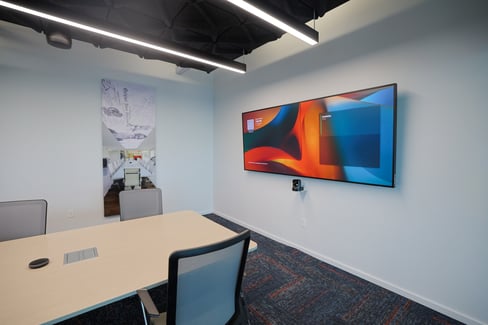
One of the most common misconceptions in commercial AV is that modern systems are simple and plug and play. That idea makes sense when you think about home technology. You can mount a TV, connect a soundbar, and be done in an afternoon.
Commercial spaces are different.
A conference room AV system is not just a display. It is audio capture, audio playback, video capture, video distribution, control systems, networking, security, and user experience all working together. When even one of those elements is overlooked, the entire system can feel unreliable, even if the hardware itself is solid.
## Where AV Projects Commonly Go Wrong
### Designing for the Room Instead of the Way People Use It
Rooms do not attend meetings. People do.
One of the most common mistakes in AV design is focusing on room size instead of room behavior. A boardroom used for executive presentations has very different needs than a training room, a classroom, or a hybrid collaboration space.
Early conversations should include questions like how many people are typically in the room, whether meetings are mostly in person or hybrid, how often content is shared, and which platforms are being used day to day.
When those questions are skipped, systems often end up being overbuilt or underbuilt. Both scenarios lead to frustration.
### Treating Audio as an Afterthought
Video usually gets all the attention. Audio does most of the work.
In real meetings, people will tolerate imperfect video long before they tolerate bad sound. Echo, inconsistent volume, muffled voices, or microphones that only pick up half the room will ruin a meeting faster than a grainy camera ever will.
Good audio design takes into account the acoustics of the room, microphone placement, proper digital signal processing, and even ceiling height and wall materials. When audio is designed intentionally, meetings feel natural. When it is rushed, meetings feel exhausting.
### Underestimating the Network
Modern AV systems live on the network.
Cameras, encoders, control processors, and collaboration systems all depend on stable and properly configured networks. When AV and IT teams are not aligned early in the project, issues often show up later as dropped connections, laggy video, devices going offline, or confusion about who is responsible when something breaks.
Successful AV projects treat audiovisual systems as part of the overall IT ecosystem, not as a separate island of technology.
### Adding Features Instead of Focusing on Usability
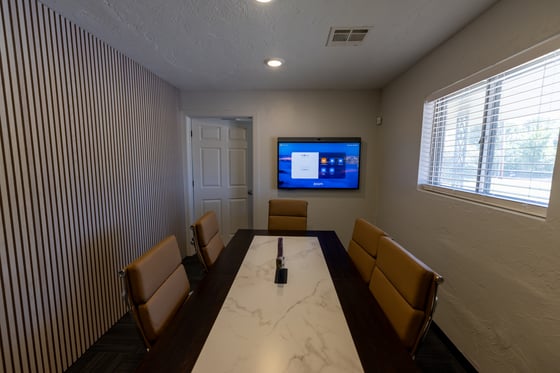
More technology does not always mean a better experience.
It is common to see rooms packed with features that never get used because people are afraid they might break something. The goal of AV is not to impress. The goal is to disappear into the background.
That usually means simple control interfaces, consistent experiences from room to room, clear documentation, and real user training instead of a rushed handoff. If someone can walk into a room for the first time and confidently start a meeting, the system is doing its job.
## What a Successful AV Project Actually Feels Like
When AV is done right, people do not talk about the technology. They say things like, “That meeting just worked,” or “We did not have to think about it.”
Behind the scenes, that success usually comes from early collaboration, a clear understanding of how the space will be used, thoughtful system design, proper testing and commissioning, and a support plan that does not disappear after installation.
It is not flashy, but it is reliable.
## Planning for the Future Without Overbuilding
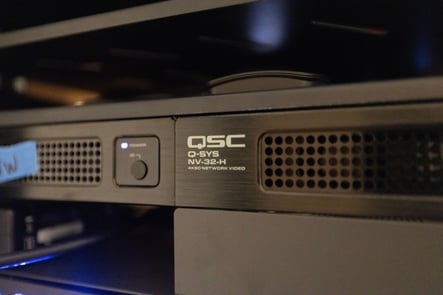
One of the smartest approaches to AV design is planning for growth without paying for everything on day one.
That might mean infrastructure that can support future expansion, control systems that are scalable, or network based solutions that can adapt as needs change. Being future ready does not mean buying the biggest system available. It means building a foundation that will not limit you later.
## Why Brand Agnostic Design Matters
Every organization works differently, and every space has its own challenges.
No single manufacturer is the right answer for every room. That is why solution first, brand agnostic design matters. The best systems are built by selecting the right tools for the specific use case, not by forcing a room to fit a product.
When technology is chosen based on function instead of branding, it serves the people in the room instead of dictating how they work.
## Final Thought
Audiovisual technology should reduce friction, not create it.
If meetings feel stressful, unreliable, or require constant troubleshooting, the problem usually started long before the system was turned on. The most successful AV projects are not the ones with the longest feature list. They are the ones that quietly work every single day.
Good AV does not call attention to itself. It simply lets people communicate, collaborate, and move on with their work.
And when that happens, nobody talks about the technology at all, which is exactly the point.
**Tags:**
### Related Articles
[Our Products](https://www.imagenetconsulting.com/products/)
- [Enterprise Content Services](https://www.imagenetconsulting.com/products/enterprise-content-services/)
- [Copiers, Printers & Scanners](https://www.imagenetconsulting.com/products/copiers-printers-scanners/)
- [Audio Visual Solutions](https://www.imagenetconsulting.com/products/audio-visual-solutions/)
- [Managed IT Services](https://www.imagenetconsulting.com/products/managed-it-services/)
- [3D Printers, Solutions & Services](https://www.imagenetconsulting.com/products/3d-printers/)
- [Wide Format Printing](https://www.imagenetconsulting.com/products/wide-format-printing/)
[About Us](https://www.imagenetconsulting.com/about/)
- [Our History](https://www.imagenetconsulting.com/about/#history)
- [Locations](https://www.imagenetconsulting.com/contact/#map)
- [In The News](https://news.imagenetconsulting.com/)
- [Careers](https://www.imagenetconsulting.com/about/careers/)
- [Privacy Policy](https://www.imagenetconsulting.com/privacy-policy/)
[My Account](https://www.imagenetconsulting.com/ecomm)
- [Register](https://www.imagenetconsulting.com/Ecomm/Account/Register?Length=7)
- [Forgot Password?](https://www.imagenetconsulting.com/Ecomm/Account/ForgotPassword?Length=7)
[Contact Us](https://www.imagenetconsulting.com/contact/)
© ImageNet consulting
- [Twitter](https://twitter.com/bmi_imageNet)
- [Facebook](https://www.facebook.com/bmiimagenet)
- [LinkedIn](https://www.linkedin.com/company/2625954)
```json
{
"@context" : "https://schema.org",
"@type" : "BlogPosting",
"author" : {
"@type" : "Person",
"name" : "Frankie Heath - AV Digital Marketing Specialist",
"url" : "https://blog.imagenetconsulting.com/audio-visual-resources/author/frankie-heath-av-digital-marketing-specialist"
},
"dateModified" : "2026-02-09T19:06:44.505Z",
"datePublished" : "2026-02-09T16:22:58.000Z",
"headline" : "Why AV Projects Still Go Sideways and How to Make Yours Actually Work",
"image" : [ "https://blog.imagenetconsulting.com/hubfs/AdobeStock_1274770327.jpeg" ],
"mainEntityOfPage" : {
"@id" : "https://blog.imagenetconsulting.com/audio-visual-resources/why-av-projects-still-go-sideways-and-how-to-make-yours-actually-work",
"@type" : "WebPage"
},
"publisher" : {
"@type" : "Organization",
"logo" : {
"@type" : "ImageObject",
"url" : "https://blog.imagenetconsulting.com/hubfs/logo-color.png"
},
"name" : "ImageNet Consulting"
}
}
```